How to Earn Free Litecoin (LTC) Playing Mobile Games: Photon Poker Review (2026)
Why Photon Poker is worth a look
Most crypto-earning mobile games are reflex-based arcade loops — merge, pop, tilt, dodge. Photon Poker is the strategic outlier: a turn-based card-placement puzzle that rewards thinking. The earning model is the same ad-supported structure as the rest of Vweeter's lineup, but the game itself plays closer to chess-puzzle than slot-machine. If you've never enjoyed the dopamine drip of a merge game, this might be the one that sticks.
It's also the only game in our crypto-earning catalog that pays in Litecoin, which matters because LTC has near-zero on-chain transaction fees compared to Bitcoin or Ethereum. The "small payouts get eaten by gas" problem barely exists with LTC — making it natural for a micro-rewards model.
How Photon Poker actually works
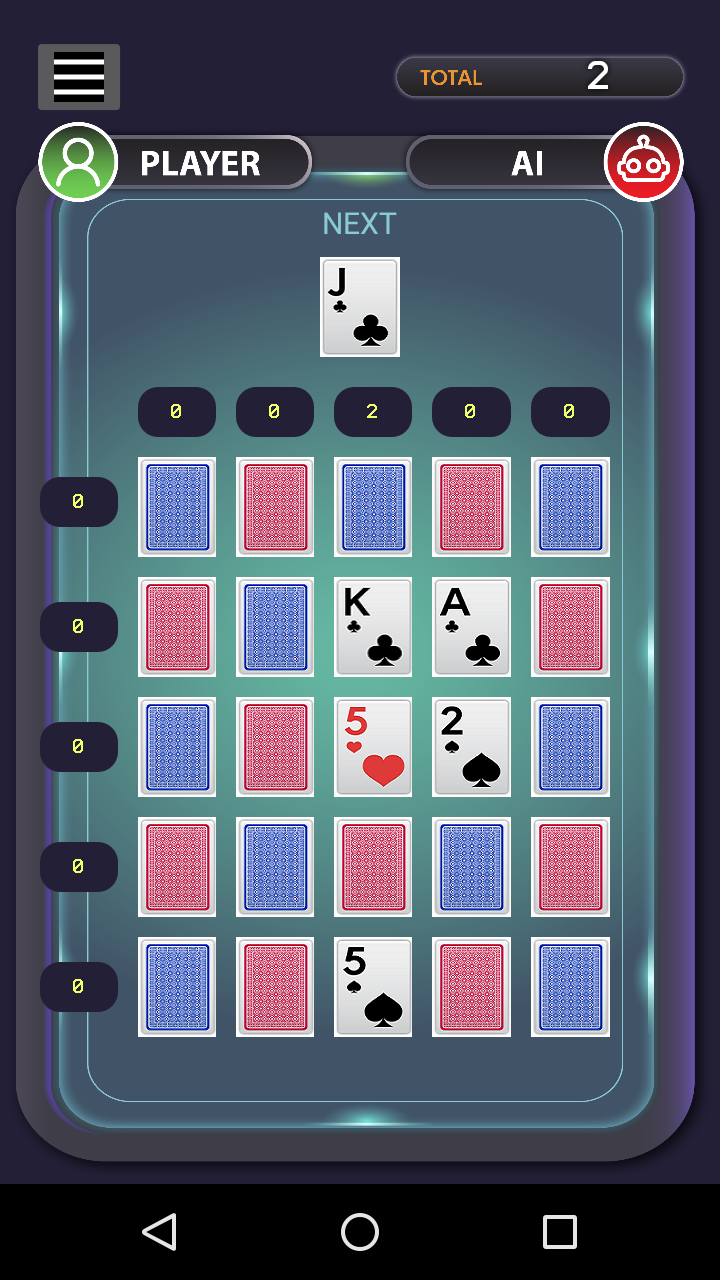
The 5×5 board
You're dealt a sequence of 25 cards, one at a time. Each card has to be placed somewhere on the 5×5 grid before the next one drops. Once a card is placed, it cannot be moved. That single rule is what makes the game strategic — every placement is a permanent commitment that affects up to two scoring lines (one row + one column).
Ten hands at once
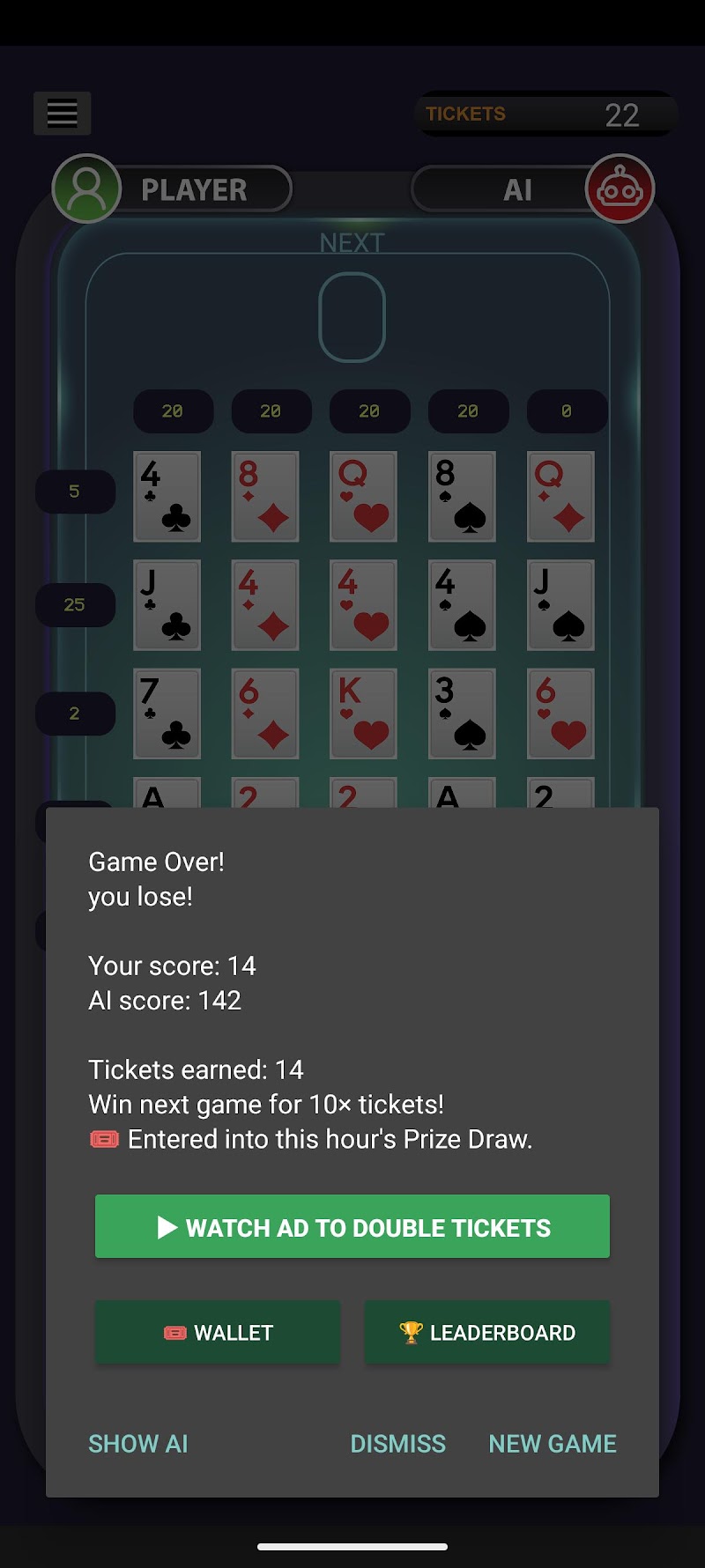
When the grid fills up (or you finish placing all 25 cards), the game scores every row and every column as if it were a poker hand. That means:
- 5 horizontal poker hands (rows)
- 5 vertical poker hands (columns)
- = 10 total hands scored simultaneously
Stronger hands score more points → more photons → more LTC. A straight flush across one column might earn you more than ten high-card rows combined, but the trick is that pursuing the straight flush often blocks easier hands elsewhere on the grid.
Solo or vs AI
The game runs solo by default — just you placing your 25 cards. Optionally you can toggle the AI head-to-head: same deck, AI places its cards on its own parallel grid, you compare final scores at the end. The AI doesn't affect your photon earnings; it's a single-player benchmark for skill progression.
What you can realistically earn
| Player activity | Daily photons | USD value |
|---|---|---|
| Casual play (1–2 games/day, no strategy) | 30 – 100 photons | $0.02 – $0.05 |
| Active play (5–10 games/day, learning curves) | 200 – 500 photons | $0.10 – $0.25 |
| Skilled play (consistent high-hand scoring) | 500 – 2,000 photons | $0.25 – $1.00 |
| Withdrawal threshold | 100 photons minimum | ≈$0.05 |
| Claim cadence | Every 3 days, paid to Coinbase | |
Numbers assume current LTC prices. Skilled players who learn the basic poker-on-a-grid heuristics out-earn casual players by 5–10× for the same time spent. This is the only game in the Vweeter lineup where the skill ceiling visibly compounds.
Strategy basics — how to actually score
The single most useful thing to internalize: your placements affect TWO scoring lines. Every card you drop affects one row and one column. So the cards you commit are doing double-duty (or double-damage). A few heuristics:
- Pairs and three-of-a-kinds are your bread and butter. They're easy to set up and reliably score. Plan for 4–6 of your 10 hands to be in this range — that's a solid baseline.
- Reserve your aces for high-card hands. If you can't form a pair or higher on a line, ace-high beats king-high. Don't waste aces in lines that already have a pair.
- Don't chase the flush. Holding four of one suit hoping for the fifth is a classic trap — you frequently end the game with a four-card flush in a row that scores as a high card. Take the pair you can see.
- The corners are precious. Each corner card sits on a row and a column that share no other cells. Corners are where straight flushes and high-value runs get built. Place weak cards in the middle of the grid where they only block one hand worth of damage.
- Read the deck. The game shows you the upcoming card before you commit. Use it. If a 7 is next and you have an 8 already, you can plan a potential straight.
Withdrawing to Coinbase
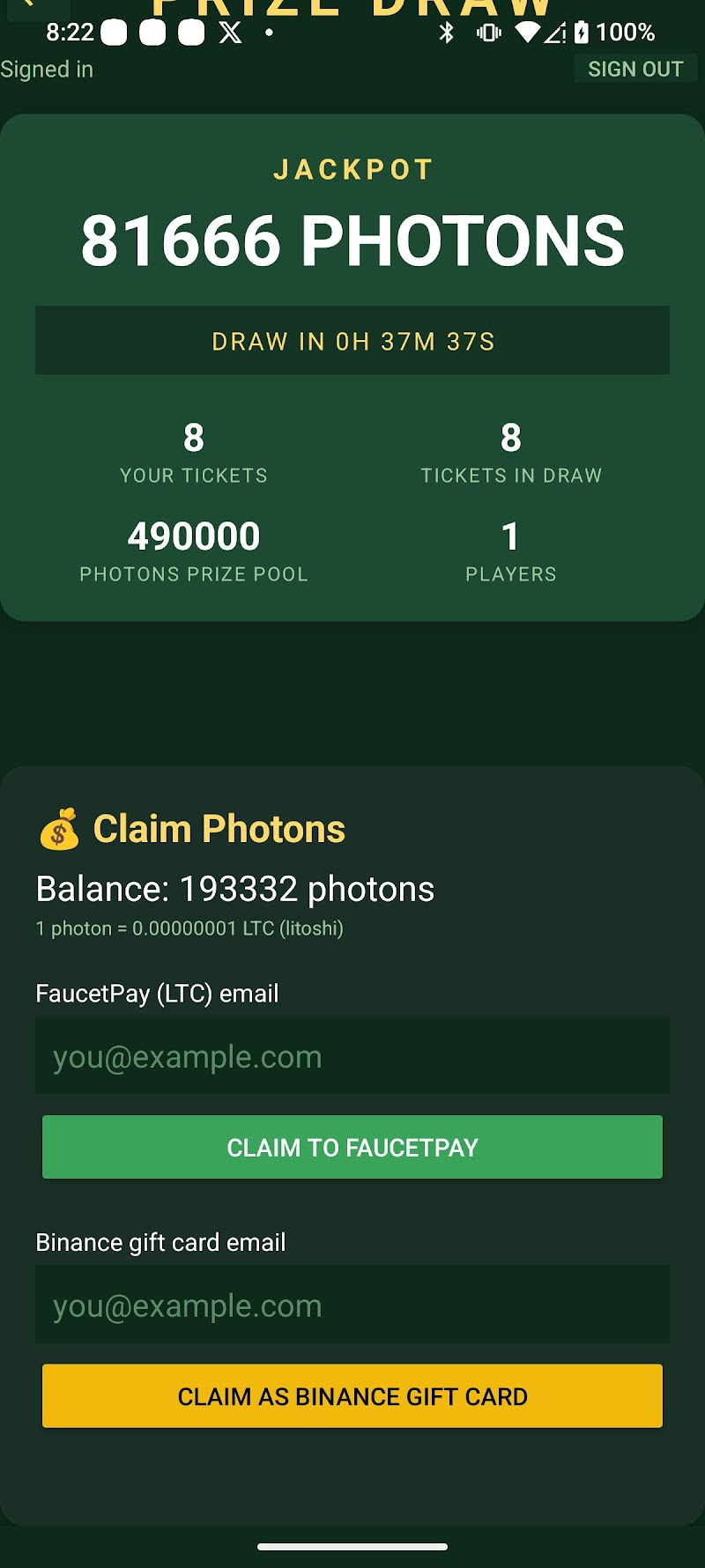
Photon Poker's withdrawal flow is intentionally narrow: only Coinbase is supported. There's no FaucetPay or Binance integration for LTC payouts in this game. The reason is that Coinbase's internal send feature lets the game push LTC to your Coinbase account by email, with no on-chain transaction fee — which is the only way micro-LTC amounts can be paid without the fee eating the entire reward.
Setup steps
- Sign up for Coinbase at coinbase.com if you don't already have an account. KYC required (ID + selfie), takes a few minutes.
- Enable 2FA in Coinbase security settings. Required for receiving funds.
- Note your registered Coinbase email. This is the identifier Photon Poker will send LTC to — not a wallet address.
- Open Photon Poker → Wallet → Coinbase. Paste in your Coinbase email. Save.
- Play, accumulate at least 100 photons, claim. Funds appear in your Coinbase LTC balance within minutes.
From Coinbase you can hold the LTC, convert to BTC/ETH/USDT, or cash out to a bank account where supported. Unlike FaucetPay or Binance, Coinbase requires KYC, which is the friction cost of using it.
Common mistakes
- Trying to withdraw before reaching 100 photons. The minimum is enforced. Play a few more sessions.
- Pasting the wrong email. The email in Photon Poker's wallet must match your Coinbase login email exactly. A typo and your LTC vanishes into Coinbase's "unknown recipient" bucket (potentially recoverable via Coinbase support, but a slow process).
- Withdrawing too often. Every-3-day cadence is enforced. Claims attempted earlier fail silently — wait the full window.
- Treating it like a slot machine. The earning curve is genuinely skill-based here. Players who pay attention to the deck preview and plan ahead out-earn random-placement players by ~10×. If you're not improving session to session, you're probably misplacing aces or chasing impossible flushes.
Ready to play?
Photon Poker — Earn Litecoin
Free poker-solitaire game, 5×5 grid, 10 hands scored simultaneously, payouts in real LTC via Coinbase. Strategic depth that rewards practice — and the only Vweeter game that pays in Litecoin.
More crypto-earning games to stack
Photon Poker is the only LTC-payer in the lineup, but if you want to accumulate multiple cryptocurrencies in parallel:
- BTC: Bitcoin Mega Merge (iOS + Android), Bitcoin 21 (crossword blackjack)
- ETH: CryptoPop (4.2★ — highest rated)
- DOGE: Doge Pong (tilt-controlled arcade)
- Solana airdrops + $FREEZE: Bitcoin Freeze (catch falling SOL coins)
- XLM: PopStellar (block-popping)
Or browse the full list of crypto-earning apps from Vweeter.
Frequently asked questions
What is a photon in Photon Poker?
A photon is the smallest unit of Litecoin used in Photon Poker — equivalent to a litoshi (one hundred-millionth of an LTC, 1 LTC = 100,000,000 photons). Photon Poker uses "photons" as its in-game branding for these micro-LTC rewards. Roughly 100,000 photons equals around 5 cents at current LTC prices.
How do you actually earn Litecoin in Photon Poker?
Place 25 cards on a 5×5 grid. Once placed, cards cannot be moved. Each of the 5 rows and 5 columns is scored as a poker hand (10 hands total). Higher-scoring hands across all 10 lines mean more photons. Earnings accumulate to your in-app wallet; once you reach the 100-photon minimum, you can claim every 3 days to your Coinbase account.
Can you play Photon Poker on iPhone?
Not currently. Photon Poker is Android-only on Google Play. iPhone users who want a crypto-earning game from Vweeter should look at Bitcoin Mega Merge, which supports both iOS and Android.
Why does Photon Poker only support Coinbase for withdrawals?
Coinbase's email-based send feature lets Photon Poker push Litecoin between Coinbase users without paying on-chain LTC network fees — critical for the small amounts a free game can sustain. Photon Poker doesn't currently integrate FaucetPay or Binance for LTC, so Coinbase is the single withdrawal path. You'll need a verified Coinbase account before claiming.
Do I play against a human opponent or an AI?
You play solo, with an optional AI head-to-head. The AI mirrors your card placements with its own attempt — you can switch between your view and the AI's view in-game via the player/AI icon, and compare scores at the end. The AI doesn't affect your photon earnings; it's a single-player skill benchmark.