What Is Play to Earn? A 2026 Beginner's Guide to P2E Crypto Games
How play to earn actually works
Every P2E game has three moving parts: a game loop that you play, a reward token that you accumulate, and a payout layer that converts those tokens into spendable crypto.
In a casual word game, the loop might be solving a daily puzzle. In an idle clicker, it might be tapping coins. The token is usually credited inside the app, and once you cross a withdrawal threshold (often 10,000 to 100,000 satoshis, or roughly $5 to $50), you can move the balance to your own wallet.
The reason developers pay players at all is straightforward: ad revenue. The longer you play, the more ads you watch, the more revenue the developer earns. They share a slice of that revenue with you in crypto. Modern P2E is essentially "ad-supported micro-earning, denominated in Bitcoin."
The 2021 boom, the 2022 collapse, and the 2026 reset
The first big P2E wave was 2021's Axie Infinity, where players in the Philippines and Venezuela earned thousands of dollars per month. That model required players to buy three NFT "Axies" upfront — sometimes for $1,000+ — and the economy collapsed in 2022 when token prices fell faster than rewards could keep up.
The 2026 generation of P2E is fundamentally different:
- Free to start. No NFTs required. No upfront crypto purchase. Install the app, play, earn.
- Paid in real BTC or ETH, not speculative game tokens that can crash to zero.
- Mobile-first. Most players are on Android, not desktop wallets.
- Realistic rewards. Apps now openly disclose that you'll earn cents or low-dollar amounts, not life-changing money.
What you can realistically earn in 2026
| Activity | Typical daily earnings | Effort |
|---|---|---|
| Merge / drop crypto games (e.g. Bitcoin Mega Merge) | $0.20 – $2.00 in sats | 10–30 min/day |
| Casual word and puzzle P2E apps | $0.10 – $1.00 | 5–15 min/day |
| Skill-based competitive P2E with leaderboards | $1 – $10 | 1+ hour/day, plus tournaments |
| Old-style NFT-gated P2E | Varies wildly; often negative after costs | Capital-intensive |
Numbers above assume an active, engaged player on a popular game. Earnings shrink dramatically if a game's user base shrinks, since rewards come out of ad revenue. Games with seasonal leaderboards (like Bitcoin Mega Merge's daily/weekly/seasonal ranks) reward consistency — the top players earn multiples of the average.
A concrete example: how Bitcoin Mega Merge works
It's easier to understand modern P2E by walking through one specific game. Bitcoin Mega Merge is a free merge game that pays in real Bitcoin satoshis. Here's the loop:
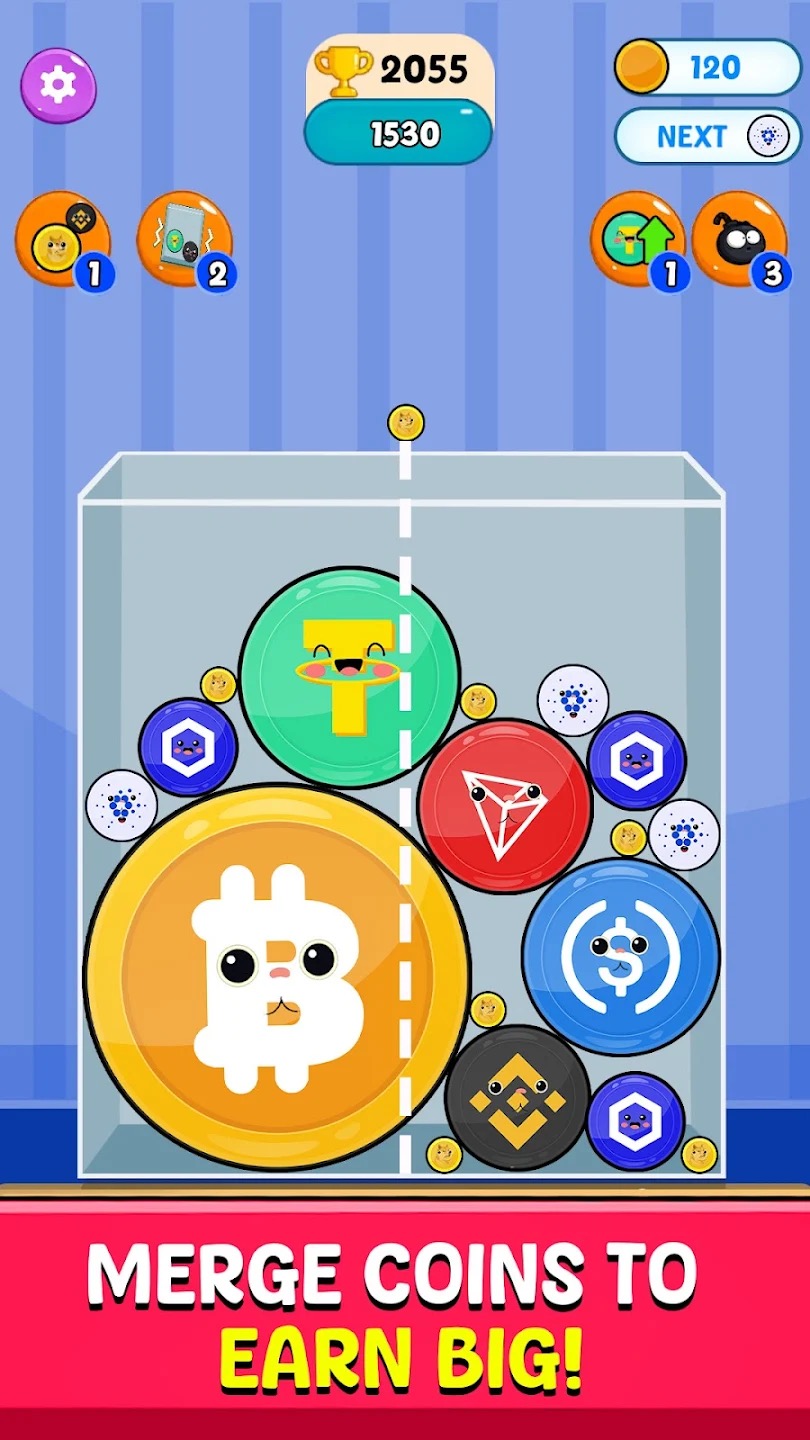
- Drop coins from above. Crypto coins fall into a box. When two of the same coin touch, they merge into a bigger coin — and the bigger the coin, the bigger its "market cap" and the more it's worth.
- Merge up to the top three coins. Reaching them earns you Gold Coins, the in-game currency that unlocks avatars and progression.
- Use power-ups strategically. Shake the box, upgrade a coin one tier, drop a bomb, or clear small coins — gem-priced tools that turn around a stuck board.
- Pick a meme coin avatar. Your avatar doubles as your league team. The best-performing team at the end of each season gets 2× points — so picking a competitive team matters.
- Climb daily, weekly, and seasonal leaderboards. Worldwide ranking is the long-term motivator. Top placements earn larger sat payouts than passive play.
- Daily rewards keep it sticky. Logging in every day gives you gems, coins, and other rewards even if you don't have time for a full session.
How withdrawals actually work
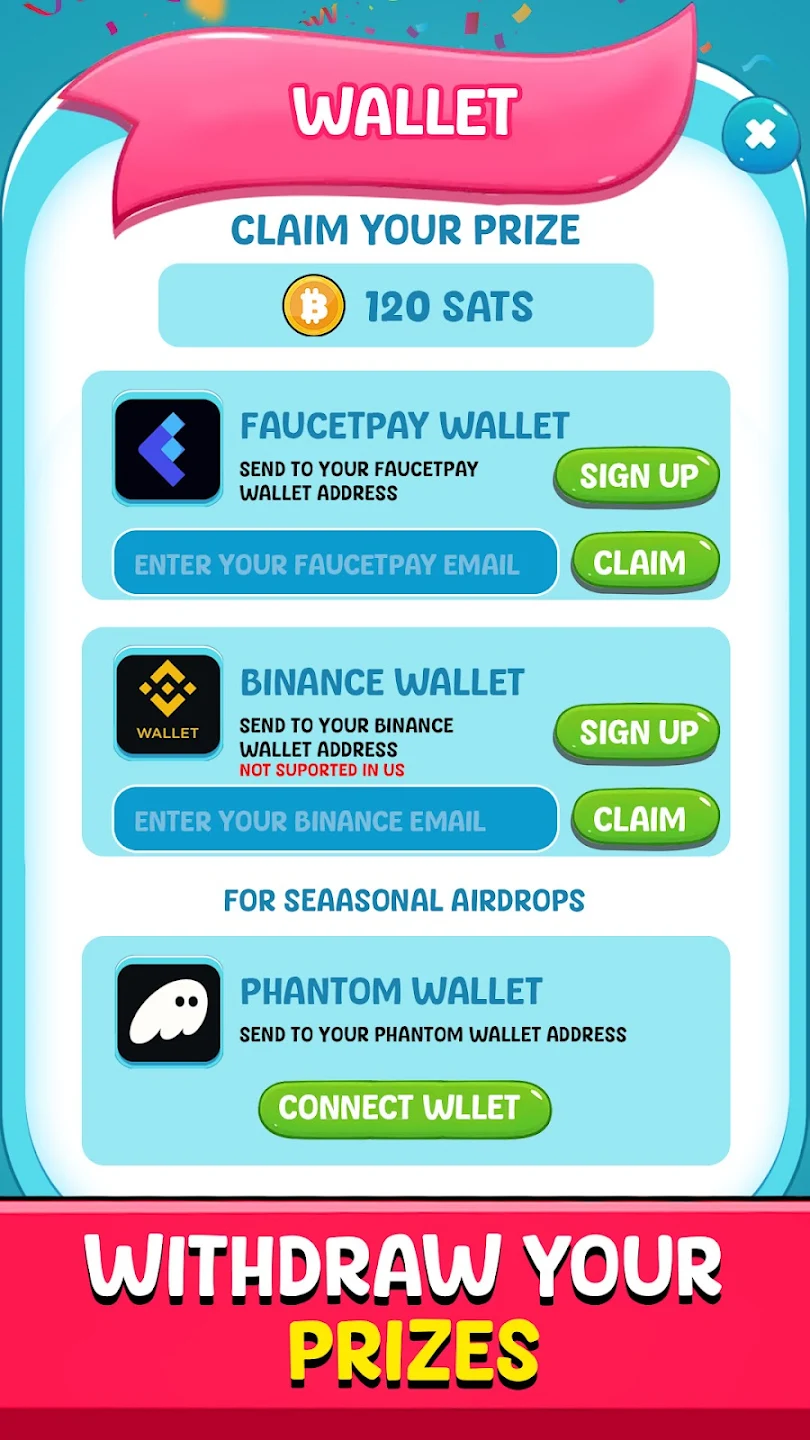
This is the part most P2E articles skip. Earning sats is meaningless if you can't get them out. Bitcoin Mega Merge supports three withdrawal targets, all set up directly from the in-app wallet:
- FaucetPay — the easiest option for beginners. FaucetPay is a free micro-payment wallet specifically designed for crypto-earning apps. Sign up with an email, paste your FaucetPay email into the game, hit Claim. No seed phrase, no on-chain fees on small amounts.
- Binance — for players who already have a Binance account. Send sats directly to your Binance-registered email. Note: Binance withdrawal is not supported in the United States — US players should use FaucetPay instead.
- Phantom — connected for seasonal airdrops. If you're competing in seasonal leaderboards and want eligibility for special airdrop rewards, link a Phantom wallet.
For a brand-new player who's never touched crypto, the recommended path is: install the game → play for a few days → reach the minimum sat threshold → sign up for FaucetPay → claim. That's the full journey from zero to your first real Bitcoin in a regular savings wallet.
How to start with zero crypto experience
- Pick one app and stick with it for a week. Reward thresholds are usually weekly, not daily. Hopping between apps means you never reach payout.
- Use the in-app wallet at first. Don't worry about MetaMask, seed phrases, or hardware wallets on day one. Withdraw to an external wallet only once you've earned enough to make it worth it.
- Verify withdrawals work. Before you sink hours, check the app's reviews specifically for "did the withdrawal arrive?" feedback. Apps that pay out reliably have it as their top review theme.
- Treat ad time honestly. A P2E app paying $1/hour while showing 30 minutes of ads is a different deal than one paying $1/hour for actual gameplay. Both are valid — just know what you're trading.
Earn Bitcoin while you merge
Bitcoin Mega Merge is a free merge game that pays out in real Bitcoin satoshis. Drop coins, merge them into bigger ones, climb the daily and seasonal leaderboards, then withdraw your sats to FaucetPay or Binance. No NFTs, no seed phrases, no upfront crypto. Available on iOS and Android.
Red flags: P2E games to avoid
- "Buy this NFT to start earning." The 2021 model is dead. Modern P2E does not require upfront crypto purchases.
- Withdrawal thresholds that move. If the minimum payout keeps creeping up as you near it, the app is stalling you.
- Vague payout currency. If the rewards are denominated in a token only that game uses, you're playing in their casino. Stick to games that pay in BTC, ETH, or stablecoins.
- Reviews full of "withdrawal pending for months." A reliable app pays out within days.
Frequently asked questions
Is play to earn actually free?
Most modern P2E mobile apps are free to install and free to start earning. The original 2021-era P2E model required buying NFTs to play, but that model collapsed. Today's apps reward time and skill, not upfront capital.
How much can you actually earn from P2E in 2026?
Realistic earnings from a casual mobile P2E game in 2026 are between $0.10 and $5 per day in crypto. P2E is best treated as micro-rewards for gameplay you'd already enjoy, not a job replacement.
Do you need a crypto wallet to play?
Most newer P2E apps include a built-in wallet, so beginners don't need to install MetaMask or set up seed phrases before playing. You can withdraw earnings to an external wallet later once you've accumulated enough. Bitcoin Mega Merge, for example, lets you claim sats to FaucetPay (easiest), Binance, or Phantom directly from the in-app wallet.
Can I withdraw my Bitcoin from Bitcoin Mega Merge?
Yes. Earnings are denominated in Bitcoin satoshis (sats) and the in-app wallet supports three targets: FaucetPay (recommended for beginners — just sign up with an email, no seed phrase needed), Binance (send sats to your Binance-registered email; not supported for US players), and Phantom wallet for seasonal airdrop eligibility.
What is FaucetPay and why do P2E games use it?
FaucetPay is a free micro-payment wallet specifically designed for crypto-earning apps and faucets. It lets games pay out very small amounts (a few hundred sats at a time) without paying on-chain Bitcoin transaction fees that would eat the entire reward. You sign up with an email and start receiving payouts. Once your FaucetPay balance is large enough, you can withdraw to your own external Bitcoin wallet.
Is play to earn legal?
Play to earn is legal in most countries, including the US, UK, EU, Canada, Australia, and most of Asia. A few jurisdictions classify crypto rewards as gambling or restrict crypto payments — check your local rules. Earnings may be taxable as income.
What's the difference between play to earn and play to own?
Play to earn rewards players with currency or tokens for gameplay. Play to own rewards players with NFTs representing in-game items they can sell. Many 2026 games blend both.